On Terms of Office and Management Transformation
KV: You have been leading the community for five years now. Comparing your first year of work to the present day, how has the logic of community management changed under wartime conditions?
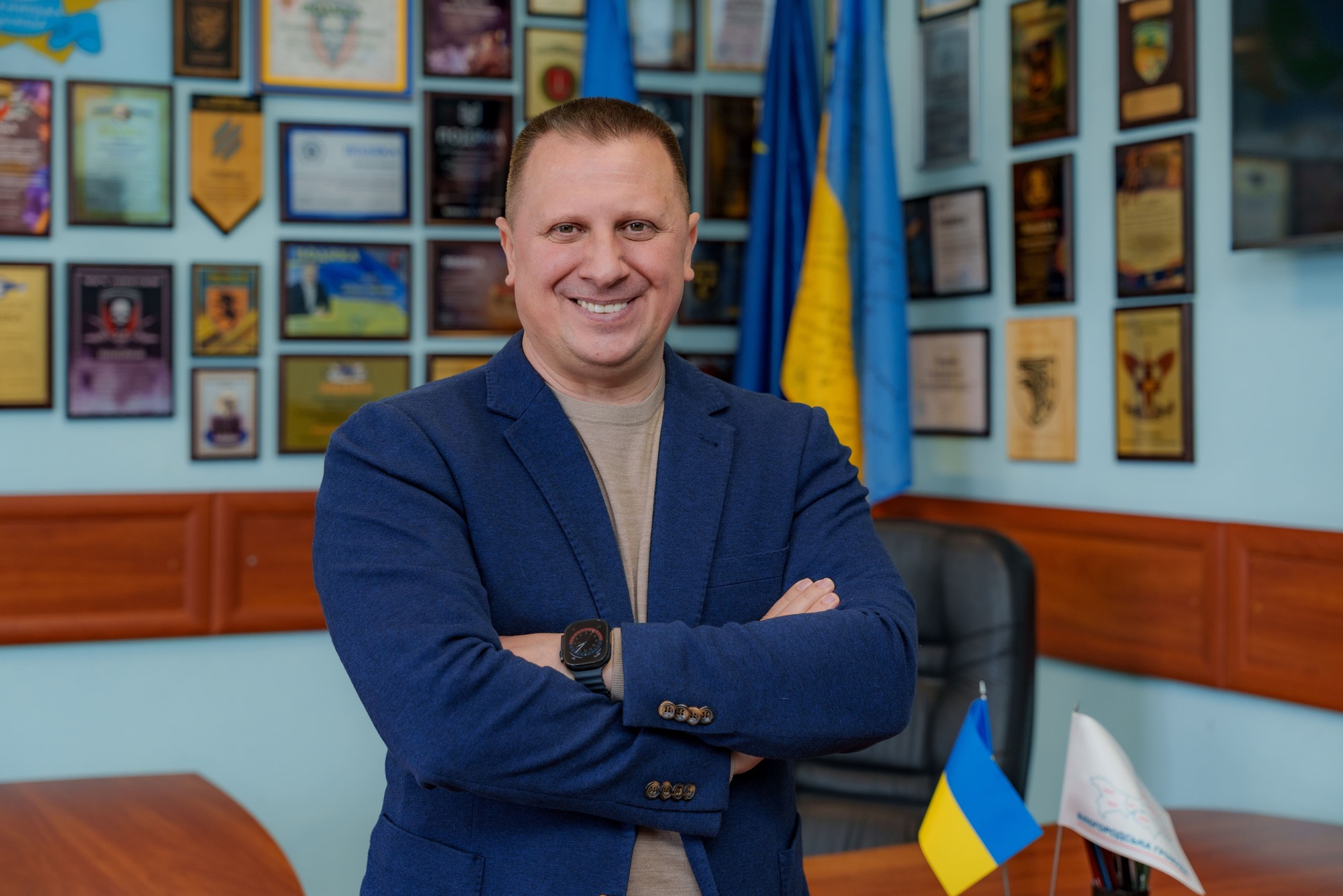
Anton Ovsiienko: First of all, we are no longer talking about five years, but actually almost 16. Prior to the creation of the amalgamated hromada (community), I served two terms as the head of Sviatopetrivske, and after the amalgamation, we began working in the new format of a unified community. Back then, one of the most difficult challenges was the amalgamation process itself: disbanding the village councils that joined the community and building a new management structure.
We had to organize all the services that previously operated at the district level practically from scratch. This included the Administrative Services Center (CNAP), all human resources operations, staff training, team recruitment, and the restructuring of communal enterprises. This process lasted a little over a year and was one of our toughest challenges even before the full-scale war. However, we managed, and today this model is functional and operates effectively.
When the full-scale invasion began, no one had clear instructions. Therefore, we made all decisions at the local level. We did everything possible to ensure the community stood strong, and that people were fed and safe. And we managed that as well.
Furthermore, we participated in the evacuation of people from the Bucha district—namely from Irpin, Bucha, Vorzel, and Gostomel. We organized reception areas for these individuals, accommodated them here, provided meals, and arranged transport to convey them further to Kyiv.
On Defense and Supporting the Military
KV: In your public mayoral report for 2025, you noted that security, support for the Armed Forces of Ukraine (AFU), and energy independence have become the top priorities. Which of these dominates today and why?
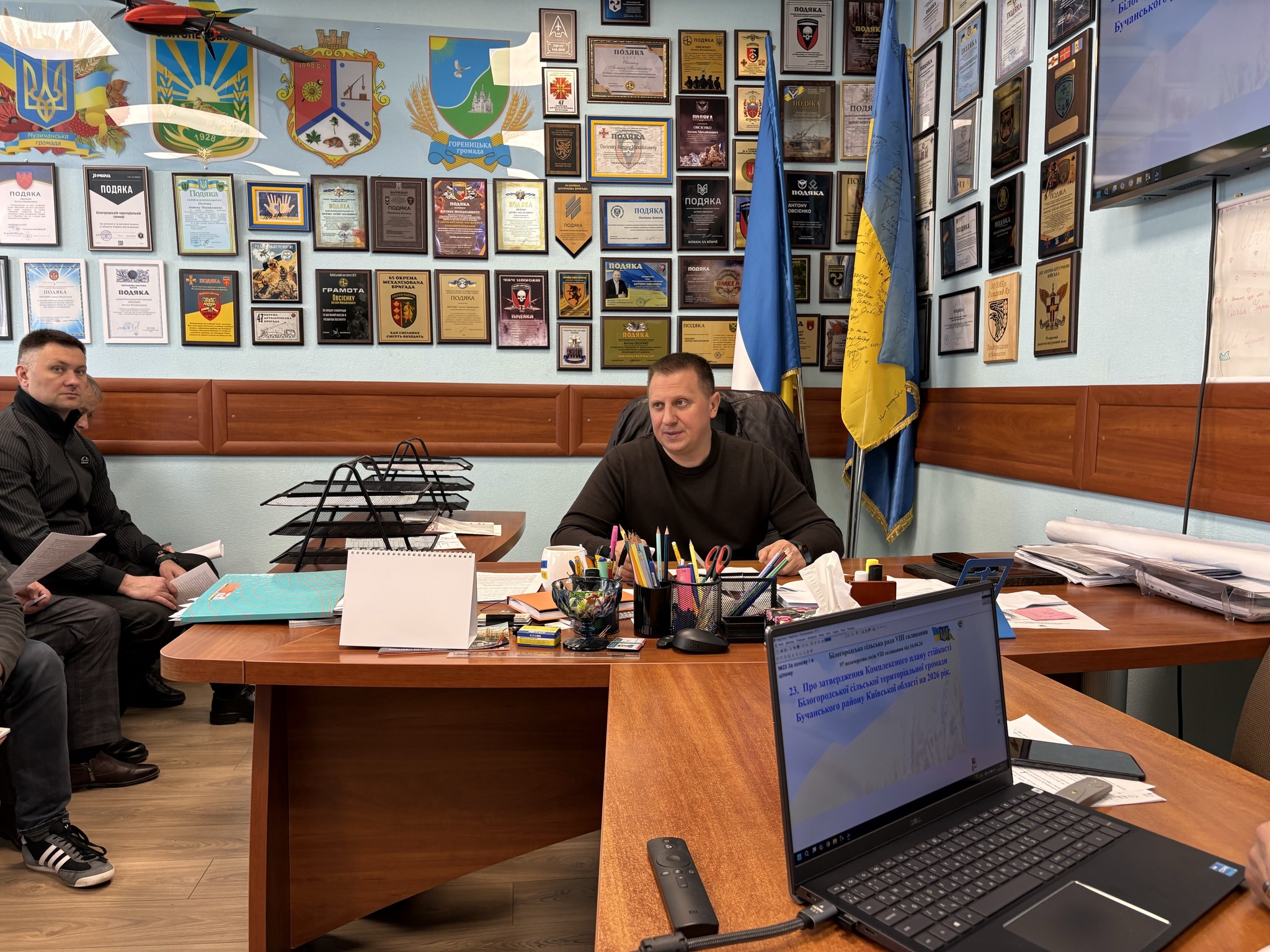
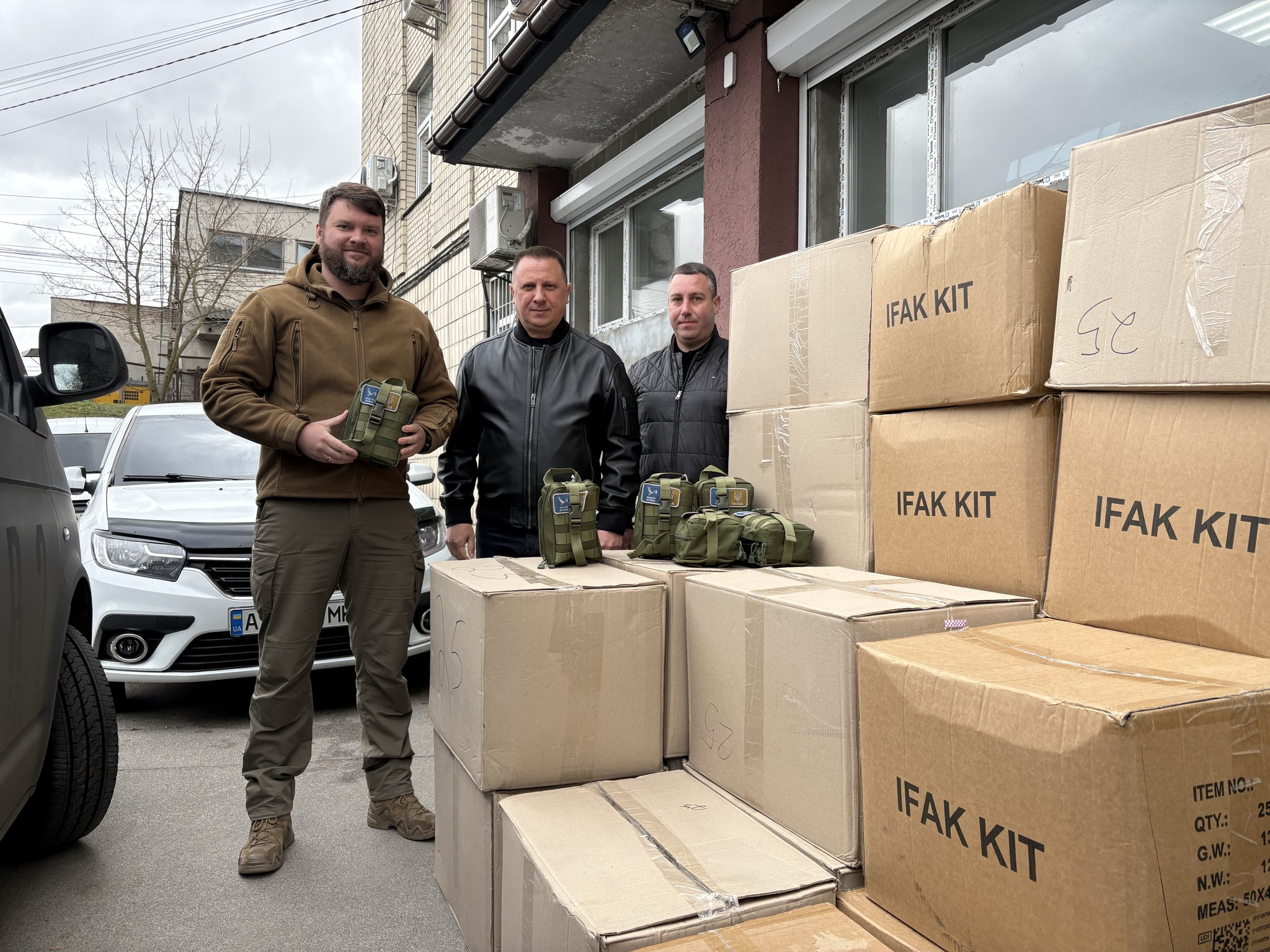
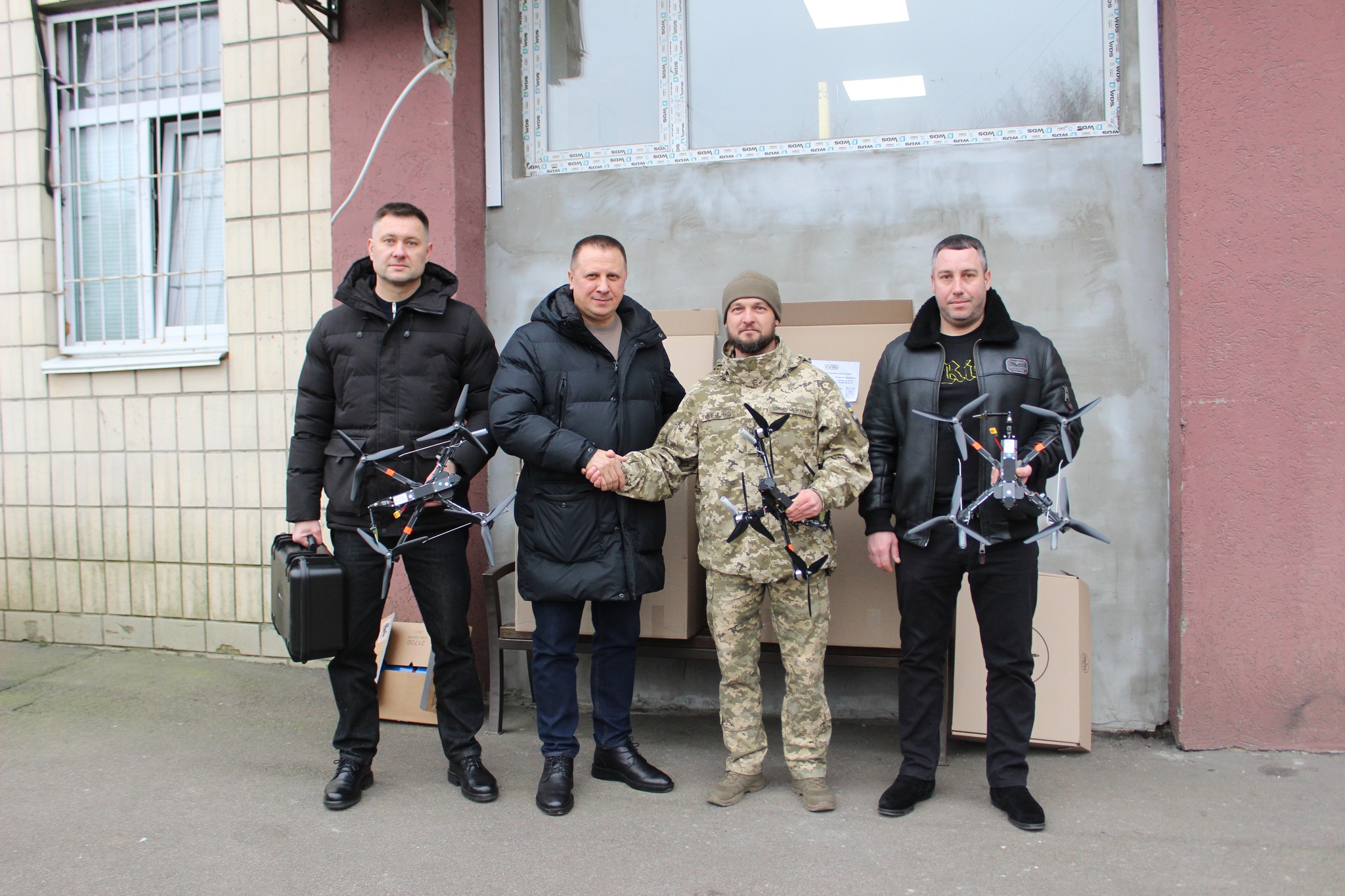
Anton Ovsiienko: Under the conditions of actual warfare, priorities have shifted. Naturally, a portion of the budget and all our efforts are currently directed toward supporting our military personnel and veterans. We provide direct subventions from the budget, procure necessary equipment, materials, and machinery, and transfer them to our defenders. The community is highly active in this area. If we look at the figures, last year we allocated around 100 million UAH to support the Armed Forces of Ukraine, the year before that—almost 51 million UAH, and even earlier—about 49 million UAH. This year, we have already allocated 55 million UAH. In total, throughout this entire period, the community has directed approximately 254 million UAH toward supporting the AFU.
This is one of our main priorities and arguably the most important one. We all strive for the fastest possible victory, so we understand how crucial this support is. As a rule, we maintain constant communication with both the military and their families, trying to help precisely where it is needed most. Of course, our financial capabilities are somewhat more limited this year because the budget has fewer resources than before. Nevertheless, everything we manage to find is primarily directed toward supporting the military.
Naturally, a balance must be struck here between aiding the military and developing the community, since we have a large population that also requires quality services.
To be frank, not everyone equally understands that more funds must be directed precisely to the AFU today. People want to see roads or even entertainment projects. But together with the deputy corps, we understand: today, priorities must be set correctly.
Yes, we certainly carry out road repairs within the community, and in certain instances, even new construction.
Another serious wartime challenge is organizing the educational process and ensuring the uninterrupted operation of communal enterprises so that all utility services are provided stably. This involves sourcing generators and securing alternative energy sources to ensure the community functions without disruptions.
KV: So you still manage to find a balance between community development and supporting the frontline?
Anton Ovsiienko: Yes, we manage to do so. And this must absolutely be done because we still need to understand and prepare for the challenges that await us in the future. You know how difficult it was for everyone to get through this past winter.
Precisely to avoid such situations, we must be energy independent. All our institutions are fully equipped with generators, and some feature solar panels. We are capable of supplying water, maintaining the sewage system, and providing all necessary services. We also build up fuel reserves, which we always keep on hand in case of emergencies.
Of course, all of this requires significant expenditure. As you understand, both purchasing a generator and installing solar panels involve serious money. Therefore, we naturally seek out international donors who assist us with this. This work is yielding results, for which special thanks go to the Kyiv Regional State (Military) Administration for its comprehensive facilitation. One would always want things to be better, greater, and faster, but we are moving in the right direction within the capabilities we have and manage to find.
KV: You mention that local residents are joining efforts to support the military. How exactly does this happen?
Anton Ovsiienko: Well, first of all, fundraising campaigns are conducted. You see, not everything can be financed from the budget. For example, we do not purchase used vehicles for the military out of the municipal budget. Therefore, we contribute to these fundraisers ourselves—both the administration staff and the community at large.
In addition, we have many volunteers who work directly with our military, providing meals and humanitarian aid. In other words, people are very active in this matter. I think one could name many individuals who work alongside the village council or directly with our soldiers. Such people exist in our community, and it is very gratifying.
KV: And these requests from the military—do they arrive on a case-by-case basis, or do you already have an established system in place? Perhaps these are one-off payments or monthly ones?
Anton Ovsiienko: Let me explain. When it comes to providing funding to military units or purchasing necessary items for them, everything happens on the basis of official requests from the military units themselves. As for supporting individual service members, veterans, or people with disabilities resulting from the war, we operate a local program called "Turbota" (Care) and the "Program for the Support of Defenders of Ukraine." This program provides an annual payment of 2,000 UAH to any service member conscripted into the AFU.
We also make an annual payment of 15,000 UAH to service members who have participated or are currently participating in combat operations. Furthermore, if there are urgent needs—such as firewood—we allocate funds to heat the homes of their families.
For families in the event of a service member's death, a one-time payment of 50,000 UAH is provided. We also pay an additional 50,000 UAH as compensation for the installation of a monument. The village council fully covers all burial expenses at its own expense.
Separately, we pay 2,000 UAH monthly to the children of service members who have lost their breadwinner—until they reach the age of 18 or complete their full-time higher education. Many children utilize these monthly payments, and we do this to support the families.
Naturally, for the Armed Forces Day of Ukraine, we also provide financial assistance to every family of a fallen service member. Similarly, we pay 50,000 UAH to the families of service members who are missing in action. We do not lose faith that these people will return alive.
We also absolutely provide assistance to service members in the event of injury. The maximum amount of such a payment stands at around 40,000 UAH, depending on the severity of the wound. It can be 10, 15, 20, or up to 40 thousand UAH. That is, if a person is a member of our community—meaning they are registered here or hold IDP (Internally Displaced Person) status—we strictly provide such payments.
KV: Veteran hubs are actively being established across the Kyiv region. Are there plans to open such a space in Bilohorodka?
Anton Ovsiienko: We are working on this issue, but currently, no such space exists yet. We face a major problem with the availability of premises—including even space to accommodate our own staff. There are very few premises in communal ownership, whereas the community is large.
Just recently, we met with an entrepreneur who is willing to provide 80 square meters of his property to accommodate such a hub. So I think we can already move forward in this direction. We still need to equip the entrance group—install a ramp or an elevator, set up a restroom taking into account inclusivity needs, and generally prepare the space. We are working on it and I believe we will be able to open it in the coming months.
At the same time, we already have specialists working with veterans—these are assistant consultants within our communal enterprise. In other words, we are already providing these services to veterans: helping with paperwork and handling other issues that arise.
We also have a psychologist officially working in the community. Therefore, we do not leave any families requiring such attention alone with their problems—we accompany and support them.
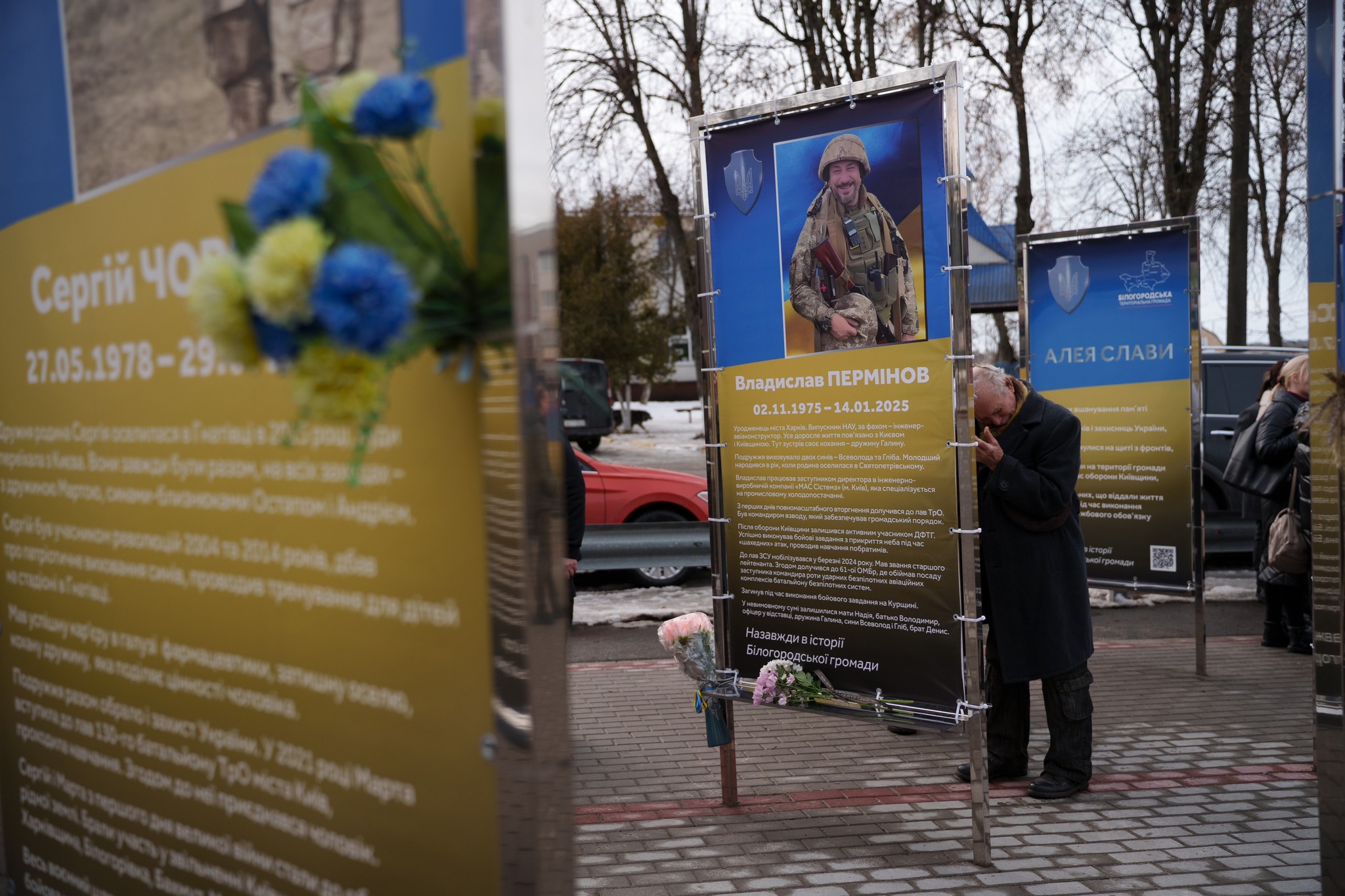
KV: There is a lot of talk about society's demand for memorializing heroes. How is Bilohorodka implementing this?
Anton Ovsiienko: We started by creating an Alley of Glory, located directly next to the village council. Steles with portraits of our Heroes have been installed there. To date, there are already nearly 100 of them, and, unfortunately, this number is constantly growing. Due to limited space, we are no longer able to increase the number of physical structures themselves, so we have begun placing portraits on both sides. Likewise, we installed a monument to volunteers on this square. This is the territory of the central estate, and it is precisely there that all fallen service members from across our entire community are honored today.
Now, we have begun creating such memorial sites in individual villages as well. We have already installed a small monument-monument in the village of Horenychi to honor our service members, and we set up a similar one in the village of Muzychi.
Work is currently underway to install a large monument in the village of Sviatopetrivske. We have already held a meeting with the families of the fallen, determined what this monument should look like, and decided exactly where it will be located. We resolved to install it on the grounds of the church, and the rector kindly agreed to this. We plan to unveil it by Independence Day, although the manufacturing procedure itself takes nearly half a year.
We plan to install similar monuments in other villages of the community as well. And after the war—the village council has already allocated land for this—we want to create a large, final, grand memorial: a space where everything will be executed in a unified style, with dignity and beauty.
KV: Regarding social support, the number of requests from residents is presumably also increasing, especially when missile strikes and damages occur. Do you handle this systematically?
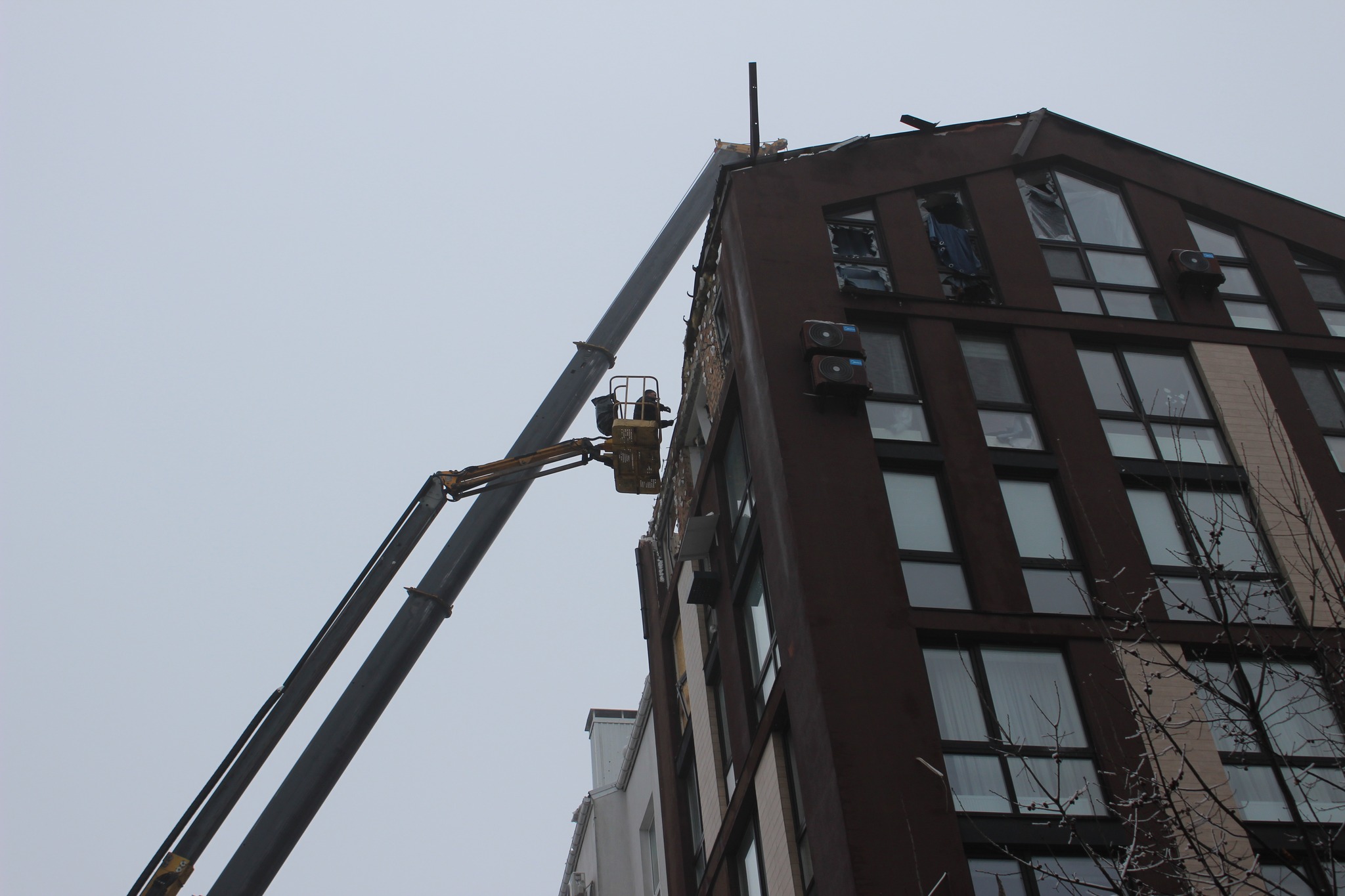
Anton Ovsiienko: Unfortunately, we have plenty of damage within the community's territory as well. In January, a tragedy occurred in which residents of Bilohorodka were killed. For such cases, a support program operates within the community. In particular, we provide each family with one-time assistance of around 50,000 UAH. Furthermore, we cooperate with charitable funds that assist with the restoration of damaged housing, particularly with window glazing.
We also finance homeowners' associations (OSBB) or property management companies from our reserve fund: we procure materials, and the management companies themselves carry out the necessary repair work. If, God forbid, a person is left without housing and has nowhere to live during the repairs, we compensate 15,000 UAH monthly for rent. This assistance is provided for up to six months—for the period while the restoration is ongoing.
KV: How does the community support internally displaced persons, and do separate assistance programs exist for them?
Anton Ovsiienko: Internally displaced persons represent a distinct challenge. Approximately 7,000 IDPs currently reside in our community, which is also a very large number of people requiring attention. We embrace them as locals. They benefit from all programs operating in the community: receiving financial and humanitarian aid whenever necessary. We do everything possible to make people feel comfortable.
And it is very important to us that they chose our community as their place of residence. At the same time, we understand that we have an outflow of population: a portion of our residents went abroad and has not yet returned. Looking at the statistics, before the war the community had a population of about 26,000, and right now there are roughly 27,000 registered residents. This means internally displaced persons have effectively filled the void left by those who departed. Naturally, we hope our people will return, as this is vital for the community. It affects budget formation, the volume of reverse subsidies, or other budget retentions executed by the state, since the population headcount determines the distribution of funds. In reality, about 55,000 people live in the community today, but unfortunately, only 27,000 are officially registered.
Therefore, we are also conducting relevant work: campaigning and encouraging people to register within the community. This is crucial because this year alone, 64 million UAH is being withheld from our budget due to the fact that the officially registered population is smaller than the actual headcount, and the local budget revenue distribution ratio depends entirely on this. I would really like people to understand this. Such work is needed not only in our community but in all suburban communities near the capital.
We could have directed these 64 million UAH toward supporting the Armed Forces of Ukraine and developing the community.
KV: 7,000 IDPs is a substantial strain. What is the community's actual capacity for receiving and accommodating new residents?
Anton Ovsiienko: Regarding accommodation options for IDPs, unfortunately, we do not possess such resources. There are no modular towns in the community, nor do we have special programs or communal property where we could settle people. Therefore, as a rule, they find housing on their own: they either rent it or move in with relatives.
On Budget, Management, and Development
KV: The community's budget has grown by over 22%. How did you manage to secure this growth under wartime conditions?
Anton Ovsiienko: First of all, we work extensively on the re-registration of businesses and individual entrepreneurs (FOPs). We even have a dedicated program: if a company re-registers within our community, then in the first year, the taxes it pays can be directed toward building a road or sidewalks next to its facilities, or toward supporting veterans. Such an initiative creates strong motivation for entrepreneurs and allows us to build collaborative partnerships.
Thanks to our status as a suburban community and convenient logistics, development does not stop even during the war: the construction of logistics complexes and the launch of small-scale manufacturing operations are currently underway. The primary task of local authorities in this process is to support business and not interfere with its development—providing permits as quickly as possible so that enterprises can build out, launch, and create jobs faster.
However, problems certainly exist—particularly with tax evaders. We lack the authority to independently administer even land or real estate taxes, although it would be logical to transfer these functions precisely to the communities. On the ground, we know the owners and the actual location of property better, which would make the collection process significantly more efficient. Due to the lack of leverage, we are forced to limit ourselves to communication alone: sending out letters and reminding them of the need to pay; however, we have no legal right to independently collect arrears or take tax debts to court.
The situation is different with lease payments, where the community acts as a direct party to the legal relationship. In this matter, we operate more effectively and, if necessary, recover debts through court proceedings.
KV: The report mentions the expansion of construction and infrastructure programs until 2027. What key facilities do you plan to implement as a matter of priority?
Anton Ovsiienko: We are currently working on three large, global projects. This involves cooperation with the European Investment Bank regarding the construction of two educational institutions and one pre-school facility. This is a co-financing arrangement for the community: 500 million UAH comes from the European Investment Bank, and another 100 million UAH comes from community funds, which we accumulated to ensure the implementation of these projects.
These projects have slowly begun to move forward. We hope that within a year and a half to two years we will finish building these facilities, and then there will no longer be overcrowding in our educational institutions. Because we understand: people are arriving, construction is ongoing, but educational institutions, unfortunately, do not yet have the capacity to fully accommodate such a large number of students in a single shift. Yes, children are studying, and we do not turn anyone away. But, of course, it would be much more comfortable if all schoolchildren could study in the first shift.
In addition, we have ready-made design and estimate documentation for the construction of a school in Bilohorodka. We prepared it, but the construction cost there exceeds 400 million UAH, and at present, allocating such funds is next to impossible. Therefore, we are currently looking for this funding for the future. The situation is identical with the kindergarten in Sviatopetrivske: we also have ready design and estimate documentation, but the cost there is already over 200 million UAH, and we have not found these funds yet either.
In other words, the projects exist. And if we managed to implement them as well, then we would truly cover almost all the educational needs of the community.
KV: There is currently a lot of talk in the Kyiv region about tariff increases for both public transport and water. Did the community manage to avoid this, or did you have to raise prices somewhere?
Anton Ovsiienko: This is a difficult question because the problem is global. And there are things that we, as a community, definitely cannot influence—for instance, the increase in public transport fares. Carriers operate within the scope of licenses and competitive selection, and route approvals are issued by the Kyiv Regional State Administration (KODA). Here, we cannot dictate terms ourselves.
Recently, there was indeed an increase in tariffs. We wrote letters repeatedly—to all ministries, to the administration, and to the carriers themselves—stating that this was outrageous. But frankly speaking, it yielded no results.
Carriers essentially have the right to regulate their prices as market rates, and we cannot influence this. At the same time, we have our own route inside the community to at least partially alleviate this burden. We purchased three buses and created our own free route within the community connecting all villages. People can reach the central estate, the village council, the starosta offices, get to work, the market, and shops.
And this route is absolutely free for our residents; the community fully covers it. We even received a few more buses, which are currently temporarily operating with the military administration of Odesa, as we transferred them as charitable aid. We also wanted to launch routes to Kyiv, but this process is highly complex and progresses with great difficulty. Even the route tender itself can be such that we might simply lose it. This is because other carriers come in and can submit a lower price, which might not be entirely economically justified, but they can afford it, whereas we cannot.
As for other tariffs—for example, water, sanitation, and similar services—yes, we are raising them, but strictly within the economically justified level. Otherwise, the enterprise will simply operate at a loss. We do this carefully: if the necessary increase is minor, we might choose not to raise it, because the community cannot compensate for everything out of its budget either. You understand: we would then be taking funds away from the military or from restoration. Therefore, unfortunately, we have to act precisely in this manner—raising tariffs to an economically justified level. Even so, our rates remain lower than in neighboring communities.
On Civil Protection and Energy Sustainability
KV: The community operates its own response system: a dispatch service, a fire brigade, and a public protection service. How much more effective is this model compared to a centralized one?
Anton Ovsiienko: We implemented the public warning system (loudspeakers) after the full-scale invasion; previously, there was no warning system in the community. We installed appropriate systems in all settlements. They are centralized, but we know that nationwide alerts sometimes arrive with a delay, so we built our system on a radio signal. Consequently, when an air raid alert is declared, as soon as it becomes known, people are immediately informed.
Of course, there are mobile applications now through which people also find out about alerts. But the system itself certainly still needs to be scaled up, because currently it is installed primarily at central locations in settlements and needs to be reinforced. However, a warning system is already present in every settlement of the community.
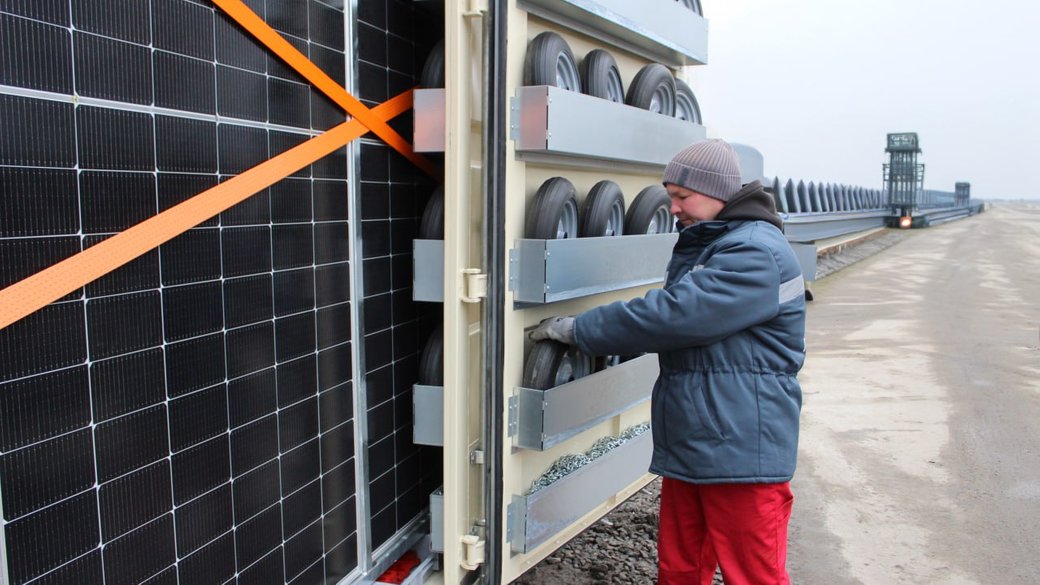
KV: Yes, the village council reported that it also received Energy BOX systems and is developing its own solar generation. Is this sufficient today to ensure the energy independence of key facilities?
Anton Ovsiienko: We have fully covered all critical facilities. Naturally, not everything is covered by solar energy. In some cases, we cannot even install solar panels because, first of all, there is a lack of surface area and simply not enough space to accommodate them. However, everything is equipped with generators and energy storage sources.
We do not have cogeneration units because we lack the type of manufacturing or large business where surplus energy could be utilized or sold. Nonetheless, we remain open to dialogue: if any business wants to enter and install such capacities, we are all for it.
On Medicine, Education, and Culture
KV: Your community regularly manages to receive new medical equipment and implement innovations like a coach center. Tell us, has the philosophy of providing healthcare changed during the war?
Anton Ovsiienko: Look, we have our own communal institution, and an outpatient clinic operates in almost every settlement. Among other things, we maintain emergency medical care at the community's expense. That means when a person calls an ambulance and the case is not strictly critical, our emergency service can be dispatched. We sustain it out of our own budget—this is our conscious initiative so that people can receive the necessary care faster.
On the basis of our communal non-profit enterprise (KNP), we are constantly developing the medical sector and upgrading its equipment. We already possess an ultrasound machine, and we are currently acquiring an additional one. They will operate in different settlements, specifically in Bilohorodka and Sviatopetrivske, as these are the largest settlements in the community.
Last year we purchased an X-ray machine, and we are currently finalizing its deployment. We have already obtained all necessary permits. I think that at the nearest session we will vote to allocate another 360,000 UAH to finally launch it. This will be another service that people can receive directly within the community. It will be partially paid, but for socially vulnerable categories of the population, these expenses will be compensated from the budget. This is done to ensure the salary of the doctor who is to join us.
We are also currently carrying out capital repairs on two outpatient clinics in Nehrashi and Muzychi. In parallel, we are arranging housing for doctors. A specialist will only come to work in a settlement if housing is provided. In addition, we have outpatient clinics in Horenychi, Stoyanka, and Luka. I think their reconstruction will be a task for next year.
KV: Has the approach to education changed regarding it as a safe environment?
Anton Ovsiienko: The construction of shelters in educational institutions so that children could study offline became a separate challenge. Wherever possible, such shelters were equipped. With the support of the regional administration and through our own funds, we did everything possible to ensure our children could study in comfortable and safe conditions. In some institutions, it was impossible to build them immediately, but we prepared the design and estimate documentation and are currently seeking funding.
The existing number of shelters is insufficient. Of course, we wanted to increase their number. But, for example, if we take our educational institutions, we have the first lyceum, and there is already an extension project that includes a shelter, but this is a comprehensive solution. It is no longer possible to implement this separately right now.
There is an educational institution in Muzychi where design and estimate documentation for a shelter is also ready. One such project costs 70 million UAH, the second—36 million UAH, I believe. So we are constantly looking for funding, submitting these projects to the DREAM program so they are visible, and reaching out everywhere there is a chance to receive support.
We always participate in contests and continuously cooperate with many European organizations. Recently, Chemonics visited us, and we are working with them on allocating funds specifically to provide solar energy to our educational facilities. I think we will cooperate successfully on this matter and make our institutions more energy independent.
Similarly, work is underway to renovate catering blocks in schools. All of this is for the children. Today we have about 5,000 students in the community and another 1,500 children in pre-school institutions.
KV: Despite the war, over 300 cultural events have been held in the community. Is this about leisure or about community resilience? Has culture transformed overall under wartime conditions?
Anton Ovsiienko: The cultural sector has transformed significantly. We have a strong cultural department: we possess many club facilities and community centers. Today, culture operates far beyond the scope of entertainment events alone. We offer many clubs, theater, and circus studios that are well-known even at the national level. We have three circus studios in Muzychi, Sviatopetrivske, and Bilohorodka. We even host a festival dedicated to this art—the Bilgorod Circus Fest—which successfully took place this year in May.
Separately, we work in the historical and cultural direction, since Bilohorodka possesses a significant historical heritage. The cultural department cleaned up the area where our ancient citadel (dytynets) was located and where an old church once stood. We frequently involve specialist archaeologists to conduct excavations. Almost no one in Ukraine is doing this right now, but we are doing it even during the war. It is crucial for us that this historical and cultural heritage is known.
In general, one of our priorities is to make the community attractive to tourists. It is impossible not to capitalize on the fact that Bilohorodka was founded by Prince Volodymyr in 980. It is one of the oldest settlements in Ukraine, alongside historical centers like Kyiv and Vyshhorod. This is truly a very momentous place, and it needs to be developed and talked about to attract tourists in the future. We even held the historical festival "Bilohorodskyi Kysil" based on the legend of the same name.
Speaking of natural areas, we have done a lot toward establishing objects of the nature reserve fund. This includes the "Priirpinnia" and "Shyrmanskyi Lis" nature reserves. We are working to preserve these areas for future generations.
Overall, taking into account the entire nature reserve fund created to date, it covers nearly 400 hectares. Priirpinnia is a vast territory. All of this must be preserved so that future generations inherit the nature that exists in our community today. We are actively engaged in this and can say we have almost completed this work.
On International Cooperation
KV: Your community became probably the first in the Kyiv region to launch modern prosthetics for veterans. How did you manage to implement such a large-scale project? How unique is this case for the region?
Anton Ovsiienko: Generally speaking, almost nothing like this exists in Ukraine yet. But we will develop in this direction. We have excellent partners—the international center "MCOP Ukraine." This is an American center founded by Americans, so it utilizes American experience in prosthetics, which is considered one of the best not only in Ukraine but practically in the world.
We have already nearly secured prosthetics for 10 of our veterans. Some of them have already received their prosthetics, while others are in the final stages. Even for those whom essentially no one else would take on, we managed to achieve results with these specialists.
Furthermore, we have already agreed to scale this project not only across the Kyiv region but throughout the whole of Ukraine. Therefore, I invite all my colleagues who wish to join or learn from this experience to do so.
We signed a memorandum with MCOP and are currently working actively to highlight this campaign so that other community leaders who have the desire can also utilize this experience and help their veterans.
You know, when we began spreading the word about this opportunity, three more people requiring prosthetics came forward even within our community, though we were completely unaware of them before. Often people demobilize, return home, and do not even mention that they face such a problem.
This is all funded through charitable and state foundations. In other words, the state, the veterans, and the community do not spend funds on the prosthetics themselves. From our side, we provide everything else: transporting the individual, picking them up, organizing transport, and providing accompaniment for support and assistance at all stages.
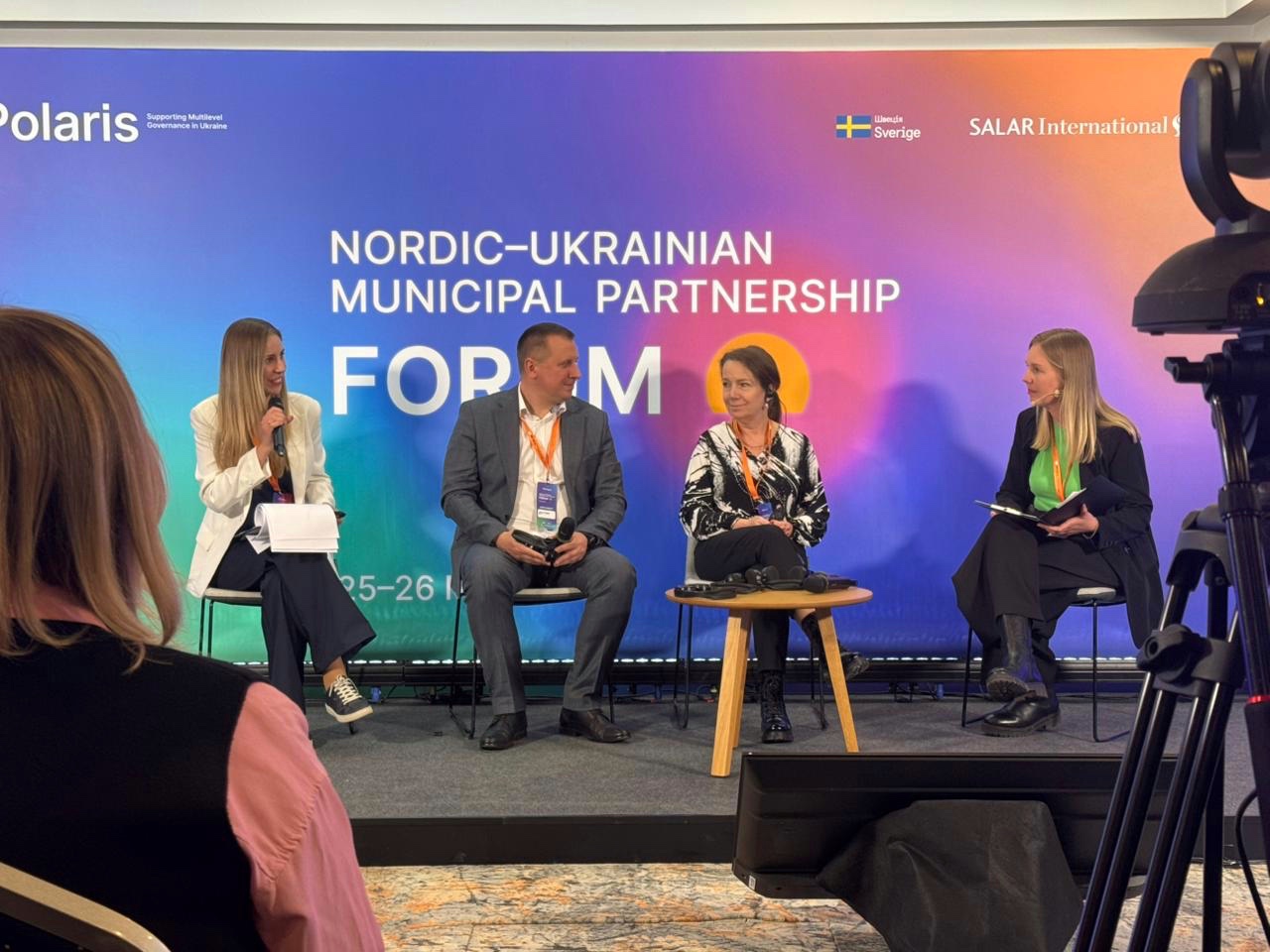
KV: The report mentions attracting international aid and partnerships. What has this cooperation already brought to the community? Are there examples of successful practical cases with international organizations?
Anton Ovsiienko: Look, if we talk about partnerships with foreign communities, we have an excellent experience of cooperation with the Tyresö Municipality in Sweden. This is also a suburban community near their capital. For the fourth consecutive year, we have been sending our children on vacation at their expense. Every year it concerns about 30 children. As a rule, these are children from the families of fallen or missing service members. They have the opportunity to go to Sweden, spend some time there, and rest, and the children love it. This year, they will host our group once again.
We held a joint meeting-conference in Lviv, and we see that they remain by our side—they assured us again this year that we will continue to cooperate. This will be the fourth such trip. We work in this direction precisely for the recreation of the children.
We also share a partnership with the German community of Lohmen. They assist us financially as well. Initially, our cooperation began in 2022-2023 with them sending us fruit and vegetable seeds so that residents could plant them.
Later, this cooperation expanded. They provided us with solar and thermal panels to supply hot water, which we used to equip a kindergarten and two lyceums. And this year, we implemented an excellent project with them: they provided us with funds to purchase specialized machinery that the community desperately needed—namely, a vacuum gully emptier (sewer cleaner).
The German side allocated 178,000 euros for this; this was their aid. We purchased this machinery using their funds, and the community co-financed 10%, which is one of the conditions set by their government. We submitted all documents and confirmed the purchase of this vehicle, so the cooperation continues. Next year, as I was promised, the volume of this assistance will be increased.
And the third case involves the French. We work with them in the area of children's rehabilitation and wellness as well. Last year, 10 children went there to recuperate and exchange experiences. This is also a suburban community—Bures-sur-Yvette. I expect their mayor to visit us this month to sign a memorandum of cooperation, making it an official sister-community partnership.
On the Future
KV: Which decisions under wartime conditions were the hardest for you, yet you believe they were the correct ones?
Anton Ovsiienko: Arguably the most difficult decision is the educational reform. This is the tough decision that must be made right now because it is an incredibly painful issue. It is truly hard for the community to accept, and quite frankly, for me too. This reform implies that the community will have to do a great deal: increase the bus fleet and re-equip classrooms. All of this falls squarely on the shoulders of the community. We understand that we must do it.
The reform is not very well received by people because it creates certain inconveniences. But if we do not support it, the community will have to cover the educational subvention entirely out of its own pocket. To give you an idea—that amounts to approximately 200 million UAH per year. In other words, if we leave all lyceums completely autonomous, it will be even more costly. The community simply cannot sustain such a financial model. Right now, this reform brings certain difficulties, but in the future, it will likely prove to be the right decision.
We discussed this collectively with the directors because the main goal is to retain all our staff. That is what matters most: ensuring that children are comfortable and that they receive all proper conditions for learning. This must be approached comprehensively. We voted on a perspective plan at the session and are currently in the discussion phase. Naturally, there are people expressing their views—and that is normal. For our part, we are trying to execute this correctly to navigate the process.
This year we submitted a co-financing application for two school buses. To fully implement this program, we require five. We can obtain two buses on a 50-50 basis—the Kyiv Regional Military Administration is helping immensely with this. So, one issue will be partially resolved at the expense of the regional budget. Next year we will need three more buses to fully secure transportation for all children to both lyceums and gymnasiums by 2027.
Fortunately, there are no under-enrolled schools in our community. Honestly, I do not even know how people endure such decisions elsewhere, because it is extremely difficult. All our educational institutions are fully staffed. In total, there are five school institutions in the community, including branches.
KV: You frequently mention the "European path" of the Bilohorodka community. How do you see the community 3-5 years after victory?
Anton Ovsiienko: I believe in the development of our community, I believe in our wonderful people who live and work here, and that includes our socially responsible businesses. I am certain: if after Victory we can direct all funds toward community development, we will accomplish a great deal in three years.
This includes infrastructure restoration, which will be paramount: roads, sidewalks, cycling infrastructure, and the tourism infrastructure we need. It includes parks and public squares, which are not a priority right now, but which we very much want to build.
Naturally, major attention will need to be paid to public maintenance and landscaping, because the community must be clean, tidy, and beautiful. Right now this is very difficult simply because we lack human hands. You understand: people are unavailable, mobilization is ongoing, and a portion of our landscaping staff has also left for the front. This is felt very acutely.
But our community truly possesses immense potential. It is a beautiful suburban area with forests and lakes; it can provide wonderful recreation. Truly excellent. I think that in three years we will handle all of this—provided there is no war and if we work using our own strengths alongside attracting donors. We already have experience cooperating with European partners, and I believe they will continue to support Ukraine. I am confident we will succeed.
KV: Is there perhaps a specific project that you are personally proud of and wanted to realize?
Anton Ovsiienko: I really want to realize the projects for our educational institutions. Not just completing the extensions we have already started working on, but developing the network as a whole. Because if we build two or three more educational institutions, it will cover the needs of a huge number of people—everyone who lives here and who will feel relief if children can study in one shift.
It is equally important to develop leisure facilities and community centers, renovating them and putting them in order. I want to make the community comfortable. But we also know that the majority of people work in Kyiv. And commuting to Kyiv can take up to 4 hours a day. Even if the city is close to the community, traffic jams, transport, and logistics remain very complicated.
Therefore, I want to increase the number of jobs within the community, so that people who live here can work here as well and receive services right here, particularly those provided by businesses. I want businesses to develop right here, and we can already see that people desire this. Even when vacancies open up in local businesses, they choose to work here rather than commute to Kyiv—even if the salary is slightly lower. Transport is very expensive now. Therefore, I would very much like people to work precisely within the community.
KV: And in conclusion: what are you most proud of across your terms in office?
Anton Ovsiienko: You know, first and foremost, I am proud of the people who live here and those who come to join us. Because a community lives through its people, through their support, and through the taxes they pay, which gives us the opportunity to develop.
I am proud that we stood our ground—all of us together. Because the community was literally one step away from occupation. It is incredibly significant that thanks to our Armed Forces and thanks to the solidarity of our people, we held out. We all united around one thing back then—supporting our military, helping out, and holding the community together.
And right now, we are recovering together in the exact same way. That is what I am truly proud of. I am proud to have the opportunity to work here alongside a strong team that is dedicated to its community—the vast majority of whom stayed; no one left. This is highly valuable. People stayed during the most difficult time.
Nevertheless, we keep moving forward. And with the opportunities that will emerge after victory, we will rapidly recover and build out further.